
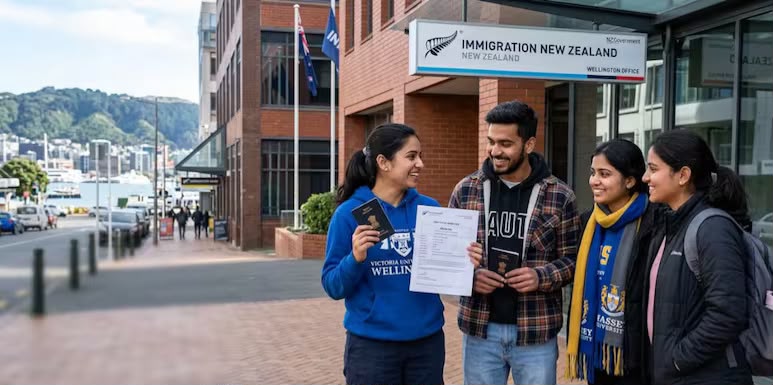
Study and work in New Zealand for international students
For many students, the chance to study and work in New Zealand is an important part of planning their education abroad. Part-time work can offer useful experience and help students manage some everyday expenses.
However, not every international student has the same work rights. Your eligibility depends on your course, level of study, duration, and the conditions attached to your student visa.
There has also been a recent change to the rules. From 3 November 2025, eligible students can work up to 25 hours a week during their studies, compared with the previous limit of 20 hours.
So, if you are planning to study in New Zealand in 2026, it is useful to understand the general rules before making plans around part-time work.
Who Can Work While Studying in New Zealand?
Many international students may be able to work while studying. However, eligibility is not automatic.
Tertiary students can qualify for part-time work if their course meets the relevant requirements. Some English language students and students in Years 12 and 13 may also have work rights under specific conditions.
For tertiary students, eligibility can depend on factors such as:
- The level and type of qualification
- The length of the programme
- Whether the study is full time
- Whether the course meets the relevant New Zealand qualification requirements
- Whether the student is on an approved exchange or Study Abroad programme
For example, eligible tertiary students can generally work up to 25 hours a week when studying full time towards a qualifying programme. Approved exchange and Study Abroad students can also have work rights under the updated rules.
The important point is that work rights depend on the individual student’s circumstances. A general rule should not be treated as confirmation of eligibility.
What Changed With the 25-Hour Work Rule?
One of the biggest recent changes is the increase in permitted work hours.
From 3 November 2025, eligible students can work up to 25 hours per week during the semester. Previously, the limit was 20 hours.
The change applies to new student visas granted from that date. Students who already had a visa with a 20-hour work condition do not automatically receive the additional five hours. They may need to apply for a variation of conditions or a new visa if they want to increase their permitted hours.
Therefore, students should always check the conditions shown on their own eVisa or visa letter.
Can Students Work Full Time During Holidays?
Part-time work is not the only option for some students.
Eligible students may be able to work full time during scheduled study breaks. Some students may also have full-time work rights during the Christmas and New Year holiday period.
The conditions can vary depending on the programme. For example, full-time work during scheduled holidays can depend on the length and structure of the course.
For certain tertiary programmes, the course must be full time and meet requirements around academic duration and credits. A programme generally needs to cover at least one academic year, with at least 120 credits over a minimum of eight months, for full-time work rights during scheduled vacations.
This is why students should check their own visa conditions before assuming that they can work full time during a break.
What Kind of Part-Time Work Can Students Do?
Students who have work rights can look for part-time employment that fits around their studies.
The type of job will depend on the student’s skills, experience, location, availability, and employer. Many students look for flexible roles that allow them to balance work with classes and assignments.
There are also restrictions to keep in mind.
International students cannot generally work as self-employed individuals under student visa work conditions. They need to work for an employer under an employment agreement. Commercial sexual services are also prohibited.
Rather than assuming that every type of employment is allowed, students should check their visa conditions and the relevant Immigration New Zealand guidance before accepting a role.
Balancing Study and Work in New Zealand
The ability to work part time can be useful, but it should not become the main reason for choosing a course or destination.
Students still need to manage classes, assignments, exams, and other academic commitments. Therefore, the right balance will depend on the course and the individual student.
Before taking a job, consider:
- Your weekly class schedule
- Travel time between work, accommodation, and campus
- Assignment and examination periods
- The number of hours you can realistically manage
- Your overall study goals
Part-time work can add valuable experience to your time abroad. However, it should support your student experience rather than come at the expense of your education.
What Students Should Check Before Working
If you plan to study and work in New Zealand, a few checks can help you avoid assumptions.
Check Your Visa Conditions
Your eVisa or visa letter will show whether you have work rights and what conditions apply. Immigration New Zealand specifically advises students to check these conditions.
Understand Your Course
Your programme can affect your eligibility for in-study work. Course level, duration, and study pattern may all matter.
Check Before Changing Courses
Work rights do not necessarily carry over unchanged if you change your course or education provider.
Immigration New Zealand states that changing education providers or moving to a lower level of study will generally require a new student visa rather than simply changing the conditions of an existing visa.
Keep Up With Rule Changes
Student visa conditions can change. Information published before November 2025, for example, may still refer to the previous 20-hour limit.
For that reason, always check the latest Immigration New Zealand information when making decisions about work.
How IEGC Can Help
Understanding work rights is only one part of planning to study and work in New Zealand.
Your course, institution, budget, career plans, and visa pathway all form part of the bigger picture. Getting these decisions right early can make the study-abroad journey much easier to plan.
IEGC helps students and parents explore study options in New Zealand, including course and institution selection and the broader visa process.
IEGC also has a Licensed Immigration Adviser who can provide individual immigration guidance where required. This can be particularly helpful when a student’s circumstances do not fit a straightforward situation or when they need to understand the conditions attached to their specific visa.
The information in this article is intended as a general guide. It does not replace individual immigration advice.
Conclusion
The option to study and work in New Zealand can make the country an attractive choice for international students. However, work rights depend on the student’s course and visa conditions, so there is no single rule that applies to everyone.
The recent increase from 20 to 25 hours per week gives eligible students greater flexibility. Even so, students should check their own visa conditions before taking up employment.
If you are considering New Zealand for your studies, look at the complete picture. Your course, institution, budget, career plans, and visa pathway should all work together.
Important Note
This article provides general information only. Student visa and work conditions can vary between individuals and may change over time.
Always refer to your own visa conditions and the latest information from Immigration New Zealand. If you need advice about your individual immigration circumstances, speak with IEGC’s Licensed Immigration Adviser or another appropriately licensed professional.
Frequently Asked Questions
Can I study and work in New Zealand at the same time?
Many international students can work part time while studying in New Zealand. However, eligibility depends on the course and the conditions attached to the student’s visa.
How many hours can international students work in New Zealand?
Eligible students can work up to 25 hours per week during their studies under the current rules. However, the exact work rights depend on the conditions of the individual student visa.
Can students work full time during holidays in New Zealand?
Some students can work full time during scheduled study breaks or the Christmas and New Year holiday period. Eligibility depends on the course and visa conditions.
Can PhD students work while studying in New Zealand?
Yes. Students enrolled in a Master’s by Research or doctoral degree at a New Zealand tertiary institution can have unlimited work rights, subject to their visa conditions.
Can international students be self-employed in New Zealand?
No. Student visa work conditions do not generally allow international students to be self-employed. Students with work rights must work for an employer under an employment agreement.
Where can I check my work rights?
Your eVisa or visa letter will show the conditions attached to your student visa. You can also check the latest guidance on the Immigration New Zealand website.
Sources
- Immigration New Zealand, Working on a Student Visa: https://www.immigration.govt.nz/study/once-you-have-a-student-visa/working-on-a-student-visa
- Immigration New Zealand, Upcoming Changes to Student Visa Work Rights: https://www.immigration.govt.nz/about-us/news-centre/upcoming-changes-to-student-visa-work-rights/